
Fluvanna County VINELink Coverage
The local service is Virginia Jail VINE, reached through VINELink. The Virginia VINE program says all local and regional jails in Virginia participate. Central Virginia Regional Jail, or CVRJ, is the primary adult jail serving Fluvanna County and links to VINE from its own site. The service supports an individual custody search and notification registration. It is not a CVRJ roster or a browseable recent-release list.
Jail VINE can send notices for custody changes that include release, transfer, death, and escape. Those terms must be read separately. A release event means the reporting jail supplied that status. A transfer event means custody continues with another agency. The service is free and anonymous, but direct facility confirmation is still needed when the exact release time, reason, destination, or safety planning depends on the answer.
The official Virginia VINE coverage page shows the local-jail scope and the boundary with state-prison notification.
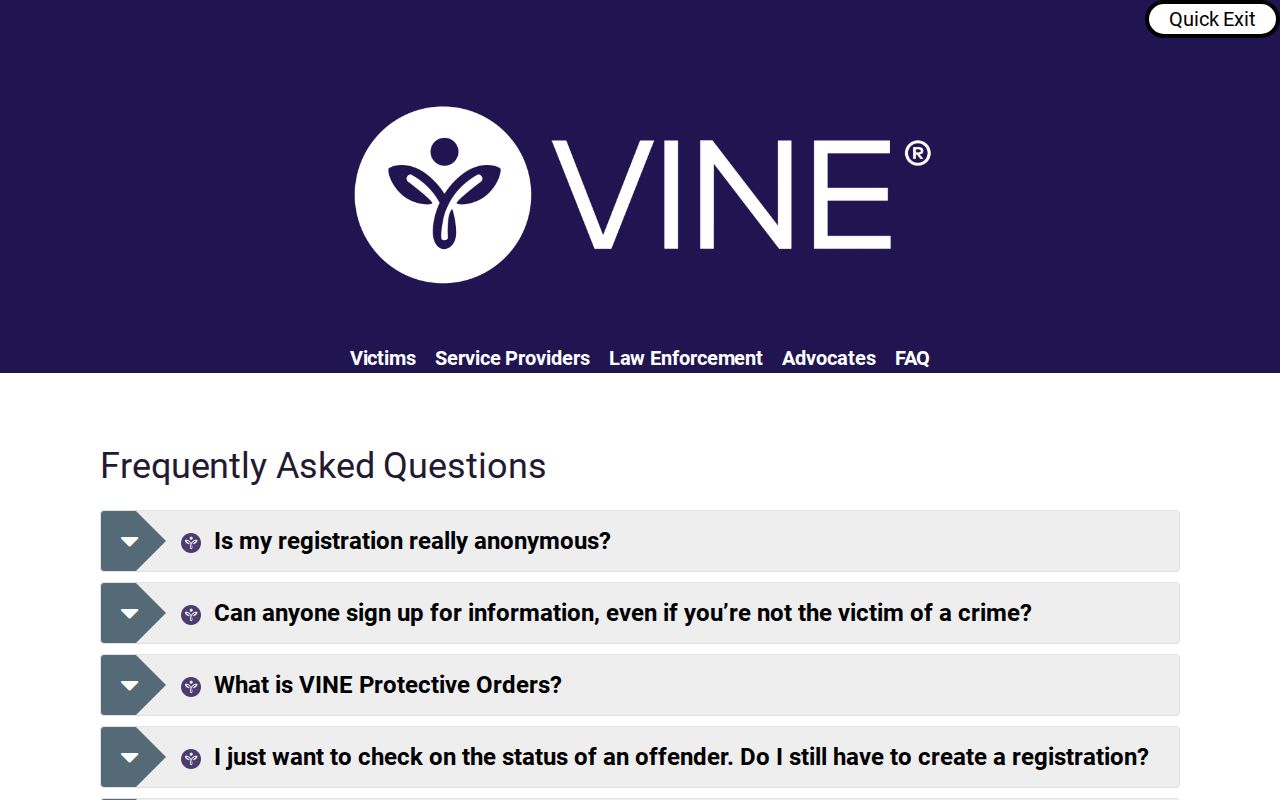
The distinction shown there is crucial: CVRJ events use Jail VINE, while a qualifying VADOC prison case moves to NAAVI after state custody begins.
Search Fluvanna Inmates on VINELink
Begin with enough information to distinguish the person. A full legal name is useful, while an offender or booking identifier is stronger when the interface accepts it and the known record provides one. A Fluvanna County arrest usually points to CVRJ in Orange, not a building named “Fluvanna County Jail.” Still, the court record or a transfer event may identify another custodian.
- Open VINELink and select Virginia so the search runs against the correct participating agencies.
- Choose the offender or custody search, not a general service or provider directory.
- Enter the name as accurately as possible. Add a known offender or booking identifier when the live form permits it.
- Compare possible matches using identifiers and the reporting facility. Look for CVRJ for the ordinary Fluvanna local-jail route.
- Open the matched record. Write down the status, event or update date, facility, and offender ID exactly as displayed.
- If the result says release or out of custody, call CVRJ at 540-672-3222 when the exact time or destination matters. If it says transfer, search the receiving system.
A no-result does not prove release. The cause may be a misspelled name, alias, agency lag, different jail, transfer, sealed matter, juvenile confidentiality, or an older event outside the live display. Recheck identifiers and the Fluvanna court case. The full Fluvanna County release-search path adds court, jail-record, VADOC, federal, and historical checks when VINE alone is not enough.
Note: Match both identity and reporting facility before relying on a custody event for personal notice or legal process.
Fluvanna VINELink Release Fields
Result fields can vary by agency and version of the interface. Virginia materials establish custody status and event coverage, but they do not promise one universal set of fields or permanent historical retention. Read only what the matched record displays. Never add a release reason, destination, or exact time from assumption.
| Field | How to use it |
|---|---|
| Name and offender ID | Separate the matched person from someone with a similar name. |
| Reporting facility | Identify CVRJ or the other participating jail that supplied the event. |
| Custody status | Read whether the source reports in custody, out of custody, or another available status. |
| Event type | Distinguish release from transfer, escape, return, or death when shown. |
| Event or update date | Place the notice in time without assuming it is the physical release timestamp. |
| Notification registration | Connect the matched record to available phone, text, or email alerts. |
An “out of custody” result is evidence about that participating jail. It does not establish that every other custodian has cleared the person. Check the event type and destination. A transfer to VADOC, another jail, federal authority, or ICE is not release to the community. For durable proof, request the actual CVRJ release record and pair it with the court disposition.
Set Fluvanna County Release Alerts
Registration begins from the matched person’s record. Confirm the person and facility first, since an alert tied to the wrong match has little value. CVRJ lists telephone, text, and email as notification choices. The available buttons and confirmation steps can change, so follow the current interface and retain the final registration details.
- Choose the notification option from the verified offender record.
- Select an offered channel: telephone, text, or email. More than one channel may be useful when the interface permits it.
- Enter and confirm the destination details. For phone registration, create the personal identification number when prompted.
- Complete any text or email verification displayed by the live service and review the selected events, including release and transfer.
- Save the confirmation, offender ID, and reporting-facility name. Add 1-800-467-4943 to contacts so Virginia VINE calls are recognizable.
- Update the registration when contact details change. Keep the phone PIN private because it confirms receipt and can stop repeat calls.
A notice is only as reliable as the jail event and registered channel. Do not depend on one automated message for urgent action. If no alert arrives when expected, check the record again and call the facility. Virginia Code § 53.1-133.02 provides for requested victim notices of release, discharge, transfer, escape, and name change and permits VINE or a similar automated system.
Keep the event selection broad enough to catch a transfer. A user waiting only for a release notice could miss the fact that CVRJ custody ended because VADOC or another jail assumed custody. Save the alert text, delivery time, offender identifier, and facility name. Those details help staff locate the relevant event if the live result later changes. They also make it easier to register in the next agency’s system without relying on a common name alone.
Fluvanna Jail VINE to NAAVI
CVRJ gives VINE unusual prominence because it publishes no official inmate roster link. That makes VINE the jail’s primary public online route for an individual status and alert. Yet the notification chain can break at a jurisdiction change unless the user recognizes Virginia’s two systems.
Jail VINE covers local and regional jails. NAAVI is VADOC’s separate, closed notification system for qualifying registered victims after VADOC calculates the release date and assumes state custody. A Fluvanna County arrest that starts at CVRJ can therefore require a new registration when a felony sentence moves the person to VADOC. The jail registration should not be assumed to follow the person through an FCCW or other state-prison term.
Use the VADOC notification page for that state-prison layer. A qualifying person can contact Victim Services about enrollment. This is separate from the public VADOC locator, which covers both incarcerated people and supervisees.
Fluvanna VINELink Custody Boundaries
VINELink is not the correct tool for every Fluvanna-related case. First identify who holds custody. CVRJ and other Virginia local or regional jails belong in Jail VINE. VADOC state imprisonment and later community supervision belong in the VADOC locator, with NAAVI for qualifying victim notification. Federal imprisonment belongs in the Bureau of Prisons locator. ICE detention has its own locator.
| Custody path | Correct check | Meaning of a move |
|---|---|---|
| CVRJ or another Virginia jail | Virginia Jail VINE and the facility | Release may be community discharge; transfer means custody continues. |
| VADOC state custody | VADOC Inmate and Supervisee Locator | A district-office location can mean community supervision after prison. |
| Federal custody | BOP Inmate Locator and federal case sources | “RELEASED” ends BOP custody, not necessarily all supervision or other custody. |
| ICE detention | ICE Online Detainee Locator | A CVRJ handoff to ICE is continued custody, not community release. |
The Virginia State Police registry is also separate. It covers people with a legal registration duty, not all released people. Presence can continue after custody ends; absence does not show that a person remains incarcerated. It should never be substituted for a jail release event.
Federal records require special care. The BOP locator covers many people who entered federal prison records, including records for many releases after 1982. A past date and a location of “RELEASED” ends BOP custody, but it does not rule out supervision or another jurisdiction. A person held before trial by the U.S. Marshals Service may stay in a contract jail and may never receive the same conventional BOP prison history. In that setting, the federal court case and authorized case contacts can be more useful than VINE.
ICE uses a separate civil detention system. Its online locator accepts an A-number and country of birth or exact biographical details. A CVRJ event showing transfer to ICE is not a release into the community. Follow the ICE custody record and read its own status. These boundaries prevent one agency’s “out of custody” message from being stretched into a claim about all government custody.
Open Fluvanna VINELink Search
The official VINELink search entry begins with state selection and the offender or custody search.
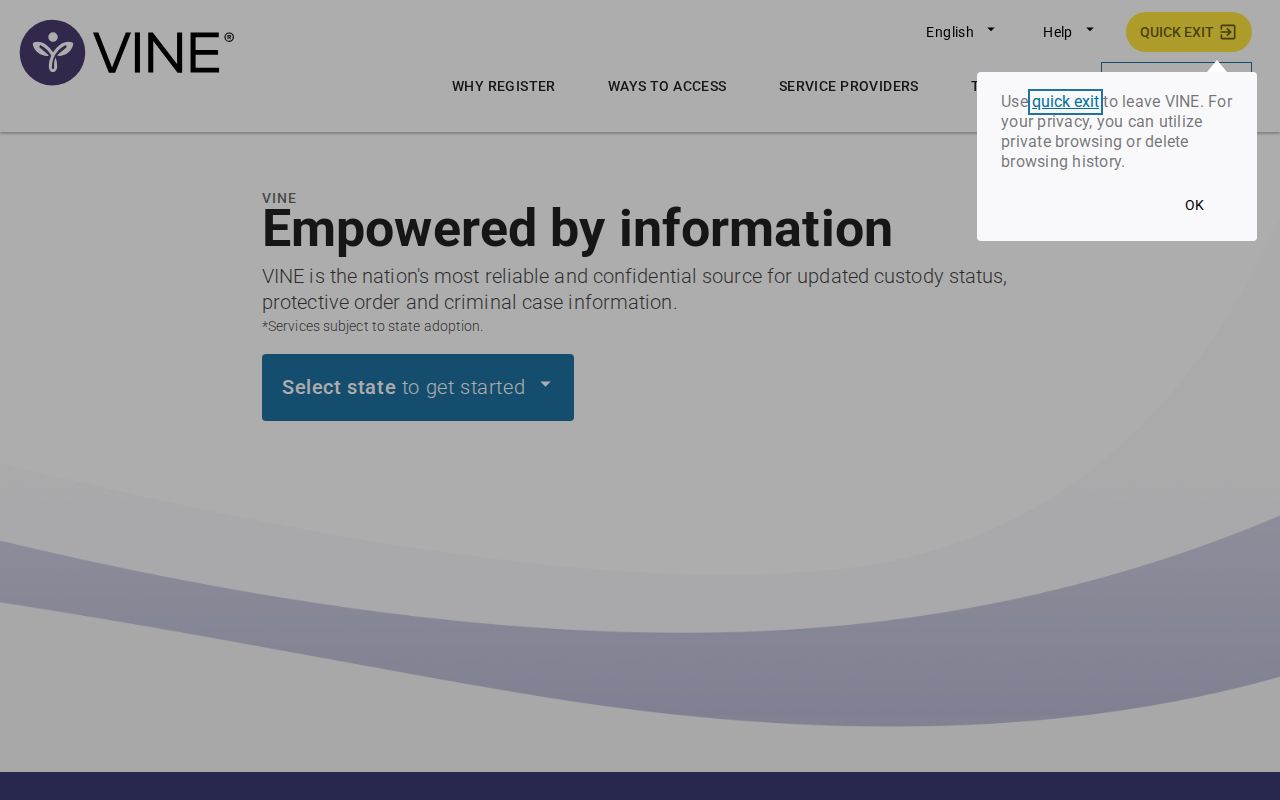
The displayed Virginia route is the starting point, not the final proof. Open the individual result and capture its reported facility, status, event date, and identifier. A screenshot of the entry screen does not establish that any named person is released.
When the result is unclear, call CVRJ at 540-672-3222. Ask a narrow question tied to the record: whether the matched person left CVRJ, the actual date and time, and whether the disposition was community release or transfer. Staff may limit details, but the custodian is the direct source. A court disposition can explain authority, and a CVRJ records request can preserve the event after a transient online status changes.
For a written request, identify the person, booking or case number if known, and approximate commitment date. Ask for the actual release date and time, release disposition, and receiving agency or destination if the event was a transfer. Request the existing electronic record. The direct wording keeps the request tied to records CVRJ may hold and avoids asking staff to create a narrative or new report.
Note: VINE supports notice and verification, but it does not replace direct confirmation for urgent safety, legal, or pickup decisions.