
Fluvanna Released Mugshots and Records
A booking photograph, often called a mugshot, documents a person’s appearance during arrest intake. It is tied to that event. It does not show whether the charge later ended in conviction, dismissal, acquittal, or another result. The image also does not prove present custody. Once a person leaves Central Virginia Regional Jail, the more important release evidence is the actual custody event and the court disposition.
Virginia provides an official access route. On the research date, Virginia Code § 2.2-3706 requires a criminal-law-enforcement public body to provide an adult arrestee photograph taken during initial intake and routine booking after a proper request. Disclosure may be delayed while release of the photo would jeopardize a felony investigation. Juvenile information is confidential, and sealing or expungement may restrict access.
The agency that holds the photograph matters. CVRJ may hold the jail intake image. The Fluvanna County Sheriff may hold a separate photograph created with an arrest or investigation record. VADOC can hold a state offender image. Ask each custodian only for the existing record it created or received.
Before relying on any photo, use the Fluvanna County released inmate search to match the person, custody event, and court disposition. This keeps an arrest image from being mistaken for proof of a current charge or present confinement.
Where Fluvanna Booking Photos Surface
No single source supplies every Fluvanna County released inmate mugshot. CVRJ has no public booking gallery or recent-release photo feed. The VADOC locator serves state custody and supervision, not every local arrest. Official press releases cover selected cases only. A channel should be matched to the agency and type of custody involved.
| Channel | Has a photo? | How to access it |
|---|---|---|
| CVRJ website or release feed | No public gallery or feed found | Use a focused records request to the CVRJ Custodian of Records. |
| Fluvanna Sheriff records | Possible when the Sheriff holds the arrest image | Request the identified adult booking or arrest photograph from the Sheriff. |
| VADOC locator or records | A state profile may display an image | Search the official locator; request a state record if the public result is absent. |
| Virginia Jail VINE | No universal public photo field is promised | Use it for person-specific custody status, not as a mugshot gallery. |
| Official press releases | Sometimes | Check the issuing agency’s dated release and case context. |
| Private reposts | Sometimes, often stale | Do not treat a repost as proof of identity, disposition, or release. |
Begin with the court case and the custodian. A Fluvanna arrest is commonly tied to CVRJ, which sits in Orange and serves five member counties. A state prisoner at Fluvanna Correctional Center for Women belongs to VADOC, not the county jail system. A person who appears in neither source may require a record request or a court search rather than a broader hunt for copies.
Note: A photograph can remain visible long after its related custody status changes, so verify release through the originating jail or corrections agency.
No Fluvanna Mugshot App Exists
No official CVRJ or Fluvanna Sheriff mobile app with a recent-release or mugshot module was verified in the research. That absence is important. Apps with similar jail names, private directory tools, and republished arrest pages are not the custodian’s official record. Downloading one can make an old image look like a current local result even when the person has been released, transferred, or cleared in court.
CVRJ instead links to VINELink. Virginia Jail VINE is a statewide custody-notification network with web and mobile access. It supports a search for one person and can report events such as release or transfer from participating local and regional jails. It is not a sheriff-branded photo app, does not provide a browsable Fluvanna mugshot wall, and does not promise that every result includes a photograph.
Use VINE to answer a custody question. Use the records custodian to seek the image. The distinction prevents a common error: a VINE release event can confirm what CVRJ reported, while a booking photograph identifies an earlier intake event. Neither record should be made to do the other record’s job. The Fluvanna County 24-hour release process gives the local person-specific verification chain because no official daily feed exists.
Request a Fluvanna Booking Photo
CVRJ’s lack of a gallery does not close the official route. The distinctive Fluvanna process has two parts: identify which public body has the image, then request that exact existing photograph. For an intake at CVRJ, start with the regional jail authority. If the Fluvanna Sheriff took or retained a separate image, send a separate request to that office. Do not ask either body to locate every copy on the internet or create a report that it does not keep.
- Confirm the arresting agency, intake facility, and court case. Record the full name, approximate booking date, and case or booking number.
- Open the CVRJ Freedom of Information request page for a CVRJ intake photo. Address the request to its Custodian of Records.
- Ask for the adult arrestee photograph taken during initial intake and routine booking. Request an electronic copy in the record’s existing format.
- If the Sheriff may hold a different image, use the Fluvanna Sheriff FOIA channel and specify the Sheriff-created record.
- Ask for an advance cost estimate and request the statutory basis for any withheld part. Do not ask the agency to create a new photo or narrative.
Virginia Code § 2.2-3704 ordinarily gives the public body five working days to respond, excluding weekends and holidays. A response may produce the record, withhold it with a statutory citation, provide a redacted part, state that it does not exist, refer the requester to a known custodian, or invoke added time when production is not practical. The deadline governs the response, not guaranteed delivery of the image. Virginia FOIA permits actual costs for access, search, duplication, and supplies. The Sheriff publishes its own cost policy, but those figures must not be assigned to CVRJ. Ask the selected custodian for an estimate. Access rights also have statutory limits, and the office may require the requester’s name and legal address.
The official CVRJ records page shows the correct regional-jail route for a Fluvanna County booking-photo request.
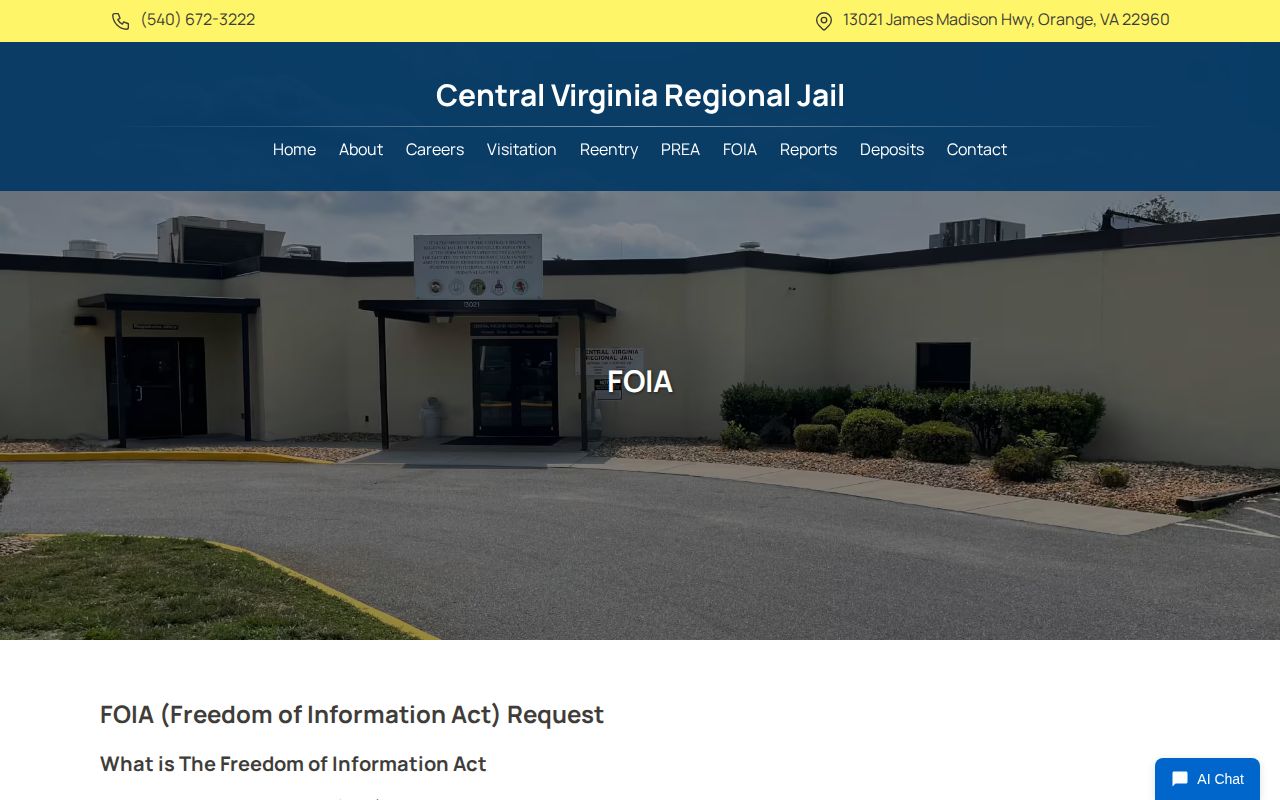
The page confirms that records held by the regional jail should go to CVRJ’s Custodian of Records rather than to a made-up Fluvanna jail office.
VADOC Photos After Fluvanna Release
A VADOC image belongs to a different record system. The VADOC Inmate and Supervisee Locator can provide a state-offender profile and may show an image in a live result. That image is not necessarily the CVRJ booking photograph from the original Fluvanna arrest. It may have been created at a later state intake.
Search by the seven-digit DOC ID when known, or by the full last name and at least the first three letters of the first name. Compare the record details carefully. VADOC says the locator is updated daily, may be outdated, and covers people in several forms of custody or community supervision. A displayed photo does not reveal whether the person is still incarcerated. Read the location and status fields separately.
A person who has fully discharged from both incarceration and supervision may not appear as expected in the current locator. In that case, use a VADOC records request for the existing state record, subject to lawful withholding or redaction. The local booking photo still belongs with CVRJ or the arresting agency.
Note: Never describe a VADOC identification image as the original CVRJ booking photo unless the agency record establishes that fact.
Fluvanna News Photos Need Context
The Fluvanna County Sheriff publishes official press-release material for selected investigations and arrests. Some releases may contain a suspect image. Publication is selective. It is not a roster, a recent-release list, or a complete set of county booking photographs. When an official release has the relevant image, save its publication date and read the described case stage.
Local news may reproduce an agency-supplied photograph. Prefer the original agency release when it is available. News coverage can explain why an image entered public view, but it may predate bond, dismissal, sentencing, transfer, or release. Check the Fluvanna court disposition and the custody source before drawing a current-status conclusion.
Commercial jail directories and mugshot reposting pages are a category readers may encounter in search results. They are not endorsed, and no such site is linked here. A private page may keep a photograph long after the official record changes, omit the court outcome, or attach the wrong custody status. Trace the event back to CVRJ, the Sheriff, VINE, VADOC, and the court rather than treating the repost as release proof. Paid removal offers are not official correction channels.
Sealed Fluvanna Mugshot Records
Virginia expungement and sealing rules can restrict official access, but eligibility depends on the case and the law in force at the relevant time. Virginia Code § 19.2-392.2 has effective-date versions. The researched version includes petition paths for qualifying outcomes such as acquittal, nolle prosequi, or other dismissal, along with special relief for identity errors and actual innocence. A brief online case summary is not enough to promise eligibility.
An expunged or sealed official record may disappear from public court or police access. That does not guarantee deletion of each private copy made before the restriction. No official Virginia law specifically branded as an anti-pay-to-remove mugshot statute was found in the research, so such a protection should not be claimed. A private removal policy is not the same as a court order or an agency correction.
For an official photo linked to an incorrect or restricted record, contact the agency that published or holds it and provide the controlling court paperwork. A court clerk can explain filing procedure but cannot give legal advice. An individual who needs to inspect and challenge the completeness or accuracy of their own state criminal-history information has a separate route under Virginia Code § 9.1-132.
Corrections must go to the right owner. CVRJ controls its jail record, the Sheriff controls its agency record, the court controls its docket, and VADOC controls its state record. A change in one system may not instantly alter all others. Keep the disposition or sealing order and use it with each official source that still shows the image.
Note: A court restriction should be taken to each official record owner because one correction may not update every separate system.